
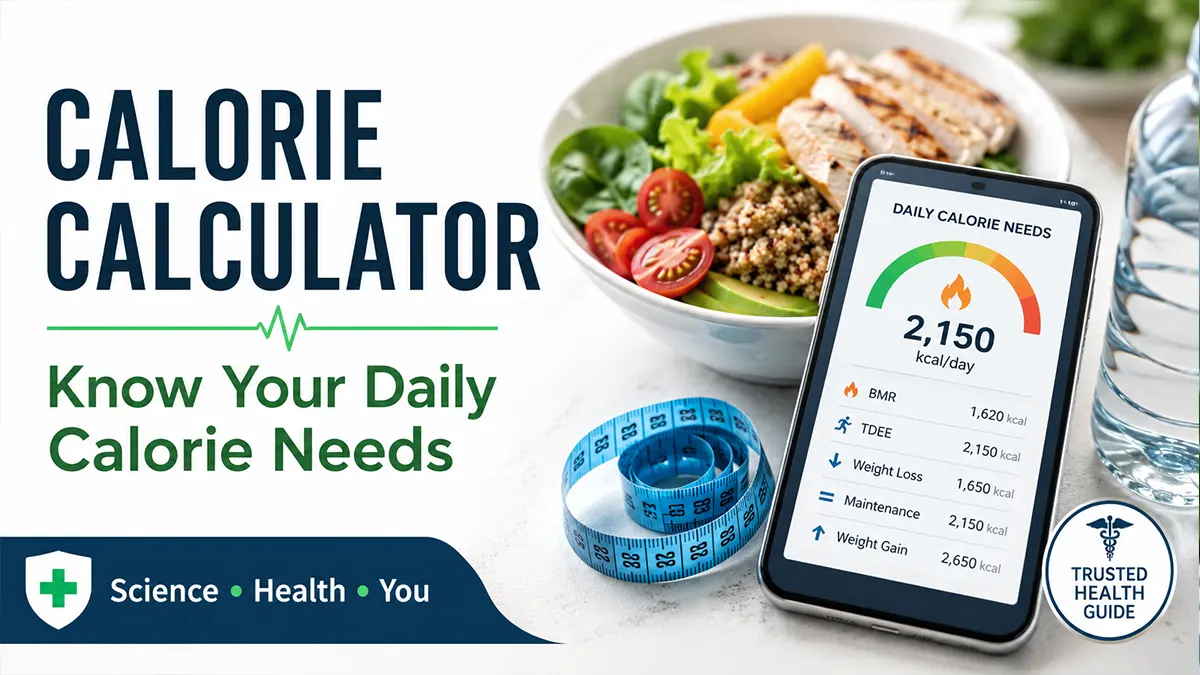
Maintaining a healthy weight starts with understanding how many calories your body needs each day. Our free Calorie Calculator helps estimate your daily calorie requirements based on your age, gender, height, weight, and activity level using the scientifically recognized Mifflin–St Jeor equation. Whether your goal is weight loss, weight maintenance, or healthy weight gain, this tool provides personalized calorie recommendations along with your Basal Metabolic Rate (BMR), Total Daily Energy Expenditure (TDEE), and suggested macronutrient intake. Use this calculator as a practical starting point to make informed nutrition decisions, support your fitness goals, and build healthier lifestyle habits.
Related Health Tools
Calorie Calculator – Calculate Your Daily Calorie Needs
Knowing how many calories your body needs each day is one of the most effective ways to manage your health and fitness goals. Whether you want to lose weight, maintain your current weight, or build muscle, our free Calorie Calculator helps estimate your daily calorie requirements based on scientifically recognized formulas.
Simply enter your age, gender, height, weight, and activity level, and the calculator will estimate your Basal Metabolic Rate (BMR), Total Daily Energy Expenditure (TDEE), recommended calorie intake, and suggested daily protein, carbohydrate, and fat intake.
Disclaimer: This calculator provides an estimate for healthy adults and should not replace personalized advice from a qualified healthcare professional or registered dietitian.
What Is a Calorie Calculator?
A Calorie Calculator is an online tool that estimates how many calories your body needs every day to support normal bodily functions and physical activity.
It uses scientifically validated formulas such as the Mifflin–St Jeor Equation, which is widely recommended by nutrition professionals for estimating calorie requirements in healthy adults.
Based on your information, the calculator can estimate calories needed to:
- Lose weight
- Maintain your current weight
- Gain weight
- Support fitness goals
- Plan a healthy diet
What Are Calories?
A calorie is a unit of energy. The food and drinks you consume provide calories that your body uses to:
- Breathing
- Heart function
- Brain activity
- Digestion
- Walking
- Exercise
- Muscle repair
- Cell growth
- Maintaining body temperature
Every person burns calories continuously—even while sleeping.
Why Is Knowing Your Daily Calorie Requirement Important?
Understanding your daily calorie needs can help you make informed nutrition choices and support long-term health.
Benefits include:
- Healthy weight management
- Better meal planning
- Improved athletic performance
- Muscle building
- Fat loss
- Reduced risk of obesity
- Better energy levels
- Healthier eating habits
How Does This Calorie Calculator Work?
Our calculator estimates your calorie needs in three steps:
Step 1: Calculate Basal Metabolic Rate (BMR)
BMR is the number of calories your body burns at complete rest.
It represents the energy required for:
- Breathing
- Circulation
- Brain function
- Organ function
- Cell repair
Step 2: Calculate Total Daily Energy Expenditure (TDEE)
TDEE includes your BMR plus calories burned through:
- Walking
- Exercise
- Household activities
- Work
- Daily movement
The calculator multiplies your BMR by an activity factor.
Step 3: Adjust for Your Goal
Depending on your goal:
Weight Loss
Approximately 500 fewer calories than your maintenance level.
Weight Maintenance
Calories equal to your TDEE.
Weight Gain
Approximately 500 additional calories above maintenance.
The Formula Used
Our calculator uses the Mifflin–St Jeor Equation.
For Men
BMR = (10 × Weight in kg) + (6.25 × Height in cm) − (5 × Age) + 5
For Women
BMR = (10 × Weight in kg) + (6.25 × Height in cm) − (5 × Age) − 161
Research suggests this equation provides reliable estimates for most healthy adults.
Activity Levels Explained
Selecting the correct activity level improves the accuracy of your calorie estimate.
| Activity Level | Description |
|---|---|
| Sedentary | Little or no exercise |
| Lightly Active | Light exercise 1–3 days/week |
| Moderately Active | Moderate exercise 3–5 days/week |
| Very Active | Intense exercise 6–7 days/week |
| Extra Active | Athlete or physically demanding occupation |
Understanding Your Results
After calculating, you’ll see:
Basal Metabolic Rate (BMR)
Calories burned while resting.
Total Daily Energy Expenditure (TDEE)
Calories burned in an average day.
Recommended Daily Calories
Customized according to your selected goal.
Macronutrient Breakdown
Suggested daily intake of:
- Protein
- Carbohydrates
- Healthy fats
Daily Calorie Needs by Activity Level
| Lifestyle | Estimated Daily Calories* |
|---|---|
| Sedentary Adult | 1,800–2,200 kcal |
| Lightly Active | 2,000–2,400 kcal |
| Moderately Active | 2,200–2,800 kcal |
| Very Active | 2,600–3,200 kcal |
| Athlete | May exceed 3,500 kcal |
*Actual requirements vary based on age, sex, body size, and health status.
Calories for Weight Loss
Creating a moderate calorie deficit can support gradual and sustainable weight loss. Reducing intake by about 500 calories per day may lead to a gradual loss of approximately 0.5 kg (1 lb) per week for many adults, though results vary.
For healthy weight loss:
- Eat more vegetables and fruits
- Include lean protein
- Choose whole grains
- Limit sugary drinks
- Exercise regularly
- Sleep 7–9 hours each night
- Stay hydrated
Calories for Weight Maintenance
Weight maintenance means consuming approximately the same number of calories that your body burns each day. Your Total Daily Energy Expenditure (TDEE) is a useful estimate of these maintenance calories.
Maintaining a stable calorie intake can help:
- Maintain a healthy body weight
- Support energy levels
- Preserve muscle mass
- Improve overall well-being
- Reduce large fluctuations in body weight
If your weight begins to change over several weeks, you may need to adjust your calorie intake based on your activity level and goals.
Calories for Weight Gain
If your goal is to gain weight or build muscle, your body generally requires more calories than it burns.
A gradual calorie surplus of about 250–500 calories per day may support healthy weight gain for many adults.
Focus on nutrient-rich foods such as:
- Lean meats
- Fish
- Eggs
- Dairy products
- Whole grains
- Nuts and seeds
- Avocados
- Beans and legumes
- Healthy oils
- Fruits and vegetables
Combine increased calorie intake with regular strength training to encourage muscle growth rather than excess body fat.
What Is BMR?
Basal Metabolic Rate (BMR) is the number of calories your body needs to perform essential life-sustaining functions while at complete rest.
These functions include:
- Breathing
- Blood circulation
- Maintaining body temperature
- Brain activity
- Organ function
- Cell repair
For most adults, BMR accounts for 60–75% of the total calories burned each day.
What Is TDEE?
Total Daily Energy Expenditure (TDEE) represents the total number of calories your body burns in an average day.
It includes:
- Basal Metabolic Rate (BMR)
- Physical activity
- Exercise
- Walking
- Household chores
- Digestion of food (thermic effect of food)
TDEE provides a practical estimate of your daily calorie needs based on your lifestyle and activity level.
Macronutrients Explained
Calories come from three primary macronutrients:
| Macronutrient | Calories per Gram | Main Role |
|---|---|---|
| Protein | 4 kcal | Builds and repairs muscles and tissues |
| Carbohydrates | 4 kcal | Primary source of energy |
| Fat | 9 kcal | Supports hormones, brain function, and vitamin absorption |
A balanced diet should include all three macronutrients in appropriate amounts.
Healthy Sources of Calories
Choosing nutrient-dense foods can help you meet your calorie needs while supporting overall health.
Protein Sources
- Chicken
- Turkey
- Fish
- Eggs
- Greek yogurt
- Cottage cheese
- Lentils
- Beans
- Tofu
Healthy Carbohydrates
- Brown rice
- Oats
- Whole wheat bread
- Sweet potatoes
- Fruits
- Vegetables
- Quinoa
Healthy Fats
- Avocados
- Almonds
- Walnuts
- Chia seeds
- Flaxseeds
- Olive oil
- Peanut butter
Factors That Affect Daily Calorie Needs
Several factors influence how many calories you require each day, including:
- Age
- Gender
- Height
- Weight
- Body composition
- Muscle mass
- Activity level
- Occupation
- Pregnancy
- Breastfeeding
- Genetics
- Certain medical conditions
Because of these differences, calorie needs can vary significantly from one person to another.
Tips for Healthy Weight Loss
If your goal is weight loss:
- Create a moderate calorie deficit
- Eat plenty of vegetables and fruits
- Include lean protein with meals
- Choose whole grains over refined grains
- Limit sugary drinks and highly processed foods
- Stay physically active
- Get adequate sleep
- Drink enough water
- Monitor your progress over time
Gradual, sustainable changes are generally more effective than restrictive diets.
Common Calorie Counting Mistakes
Avoid these common mistakes:
- Underestimating portion sizes
- Forgetting snacks and beverages
- Ignoring cooking oils and sauces
- Eating too few calories
- Overestimating calories burned during exercise
- Focusing only on calories instead of overall nutrition
Balancing calorie intake with food quality is important for long-term health.
Who Can Use This Calorie Calculator?
This calculator is suitable for most healthy adults who want to estimate their daily calorie needs.
It may be useful for:
- People trying to lose weight
- Individuals maintaining their weight
- Those aiming to gain weight
- Fitness enthusiasts
- Athletes (as an estimate)
- Personal trainers
- Dietitians during initial assessments
- Students learning about nutrition
People with certain medical conditions, pregnancy, breastfeeding, or specialized dietary needs should seek personalized advice from a qualified healthcare professional.
Frequently Asked Questions
Is this Calorie Calculator accurate?
The calculator provides an evidence-based estimate using the Mifflin–St Jeor equation. Actual calorie needs vary depending on individual health, body composition, and lifestyle.
How many calories should I eat to lose weight?
Many adults begin with a moderate reduction of about 500 calories per day, but the ideal amount depends on individual goals and health status.
Can I use this calculator to gain muscle?
Yes. The calculator can estimate calorie needs for weight gain. Combining adequate calorie intake with resistance training and sufficient protein supports muscle development.
Why is my calorie requirement different from someone else’s?
Factors such as age, sex, height, weight, muscle mass, genetics, and activity level all influence daily calorie requirements.
Should I count calories every day?
Some people find calorie tracking helpful for learning portion sizes and meeting goals. Others may prefer focusing on balanced eating patterns. Choose the approach that works best for you.
Medical Disclaimer
This Calorie Calculator is intended for educational and informational purposes only. It provides estimates and should not replace personalized medical or nutritional advice.
If you are pregnant, breastfeeding, under 18 years of age, an older adult with complex health needs, or have conditions such as diabetes, kidney disease, eating disorders, thyroid disorders, or other medical concerns, consult a qualified healthcare professional or registered dietitian before making significant dietary changes.
Conclusion
Our Calorie Calculator provides a quick and convenient way to estimate your daily calorie needs using the scientifically recognized Mifflin–St Jeor equation. Whether your goal is weight loss, weight maintenance, or healthy weight gain, understanding your calorie requirements can help you make informed nutrition decisions.
For the best results, combine your calorie goals with a balanced diet, regular physical activity, sufficient sleep, and healthy lifestyle habits. Remember that these estimates are a starting point, and your individual needs may differ based on your health, body composition, and personal goals.
About This Article
Written by: TopCityHub Editorial Team
Reviewed by: TopCityHub Editorial Review Team
Last Updated: July 30, 2026
How We Researched & Ranked
The information in this article is based on extensive research and publicly available data. Our editorial team evaluates each business using multiple quality factors to help readers make informed decisions. Depending on the category, we consider:
- Overall reputation and customer reviews
- Google ratings and verified public feedback
- Years of experience and market presence
- Quality of services and facilities
- Professional qualifications and expertise
- Accreditations, certifications, or recognitions (where applicable)
- Accessibility, customer support, and available amenities
- Information published on official websites and trusted public sources
Our rankings are prepared independently for informational purposes and may change as businesses update their services or new information becomes available.
Sources
To ensure accuracy, this article has been researched using one or more of the following trusted sources:
- Official business websites
- Google Business Profiles
- Government department websites
- Regulatory and accreditation organizations
- Official company or institution publications
- Publicly available customer reviews and business information
Editorial Policy
Every article published on TopCityHub is reviewed for accuracy, clarity, and relevance before publication. We strive to keep our content updated regularly; however, business information, services, pricing, operating hours, contact details, and other details may change over time. Readers are encouraged to verify the latest information directly with the respective organization before making any decisions.
Disclaimer
The content on TopCityHub is provided for informational purposes only. While we make every effort to ensure accuracy, we do not guarantee that all information is complete, current, or error-free. TopCityHub is an independent informational platform and is not affiliated with or endorsed by the businesses featured unless explicitly stated.